
Shoji Kawamori and Hidetaka Tenjin Talk Macross in the US, AI, and More
A conversation with the creator of Macross and a veteran designer conducted three years ago at Otakon 2023
Patrick and Evan were fortunate enough to sit down with both the creator of Macross, Shoji Kawamori, and famed Macross mechanical designer and illustrator Hidetaka Tenjin, to discuss the past, the present, and the future of Macross around the globe. This interview was conducted at Otakon 2023 in Washington, DC and came immediately on the heels of major announcements from Mr. Kawamori, Big West, and their partners regarding the future of Macross and the ability for the franchise to finally be licensed and released in the United States. This also followed the announcement that Mr. Kawamori would be working directly with famed animation studio Sunrise on a new series in the Macross franchise.
Additionally, we took the opportunity to discuss developments in AI with Mr. Kawamori since it plays a major role in one of his most famous works, Macross Plus. As a reminder, since this interview was conducted nearly three years ago, in 2023, and discusses technologies like AI that have seen significant development and discussion since, it’s entirely possible that both interviewees’ views have evolved since this interview was conducted.

Ani-Gamers: To kick things off, after seeing you guys at the Big West Macross panel, it seems like you’re really happy to be here properly representing Macross again. And I wondered if you could talk a little bit about how you feel about finally being here for Macross and the fact that everybody is going to get to see all of these shows properly in the West after all this time.
Shoji Kawamori: The time is finally here. It’s been 30 years that we have wanted this to happen. And I feel that we are very happy to be able to get to this point in time. It’s kind of like seeing the Cold War settle, because there’s no time to be fighting amongst each other when there are things like COVID and so on out there. So it really feels good to see progress.
Hidetaka Tenjin: I don’t really have the same kind of 30 years of context that Mr. Kawamori has, but what I am able to say is that seeing change happen between the relationships between Harmony Gold and being able to properly represent Macross to Americans is definitely something big for me. Because for me, I have lots of American friends and associates, and I’ve met them through conventions like Otakon, and they keep on telling me how Macross means a whole lot to them.
And for us, seeing people talk about Macross in such a way, it makes us finally be able to give them what they have wanted for a long time. So I feel very happy that we are finally able to work with the friends that we have developed over here and work with Big West to finally see progress happen on the Macross situation. So I would say that this is the beginning of a whole different thing, of a new thing. So I am very happy to be able to witness that happen.
Ani-Gamers: Next is kind of a two-part question for Kawamori-san. You and Haruhiko Mikimoto famously worked on a Gundam doujinshi called Gunsight One.
Kawamori: *Laughs* Wow. That’s amazing.
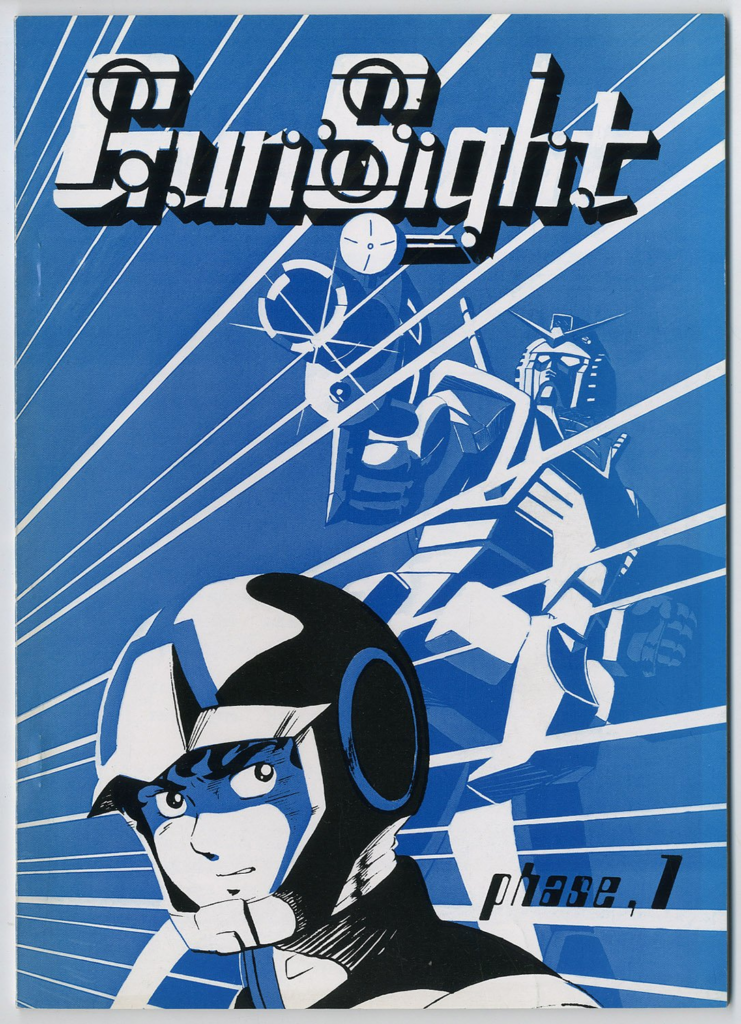
Ani-Gamers: Can you talk a little bit about how your early fan activities shaped your career? And how does it feel to have started as a fan and to now work directly with Sunrise, the studio behind Gundam, to make Macross?
Kawamori: So with Mikimoto-san, I was friends with him since high school, and we were kind of drawing, drawing buddies, and we had gone to many fan events together.
So with regards to Sunrise, I’ve been a fan since I was into Reideen and Combattler V. And also, the first time I had a chance to work with Sunrise was in Fighting General Daimos, where I designed the guest mecha for Daimos once. So I believe that there’s a gradation happening here between the fan work and actual industry work. The lines are a bit blurred.
And even with regards to Gundam, I had a senpai working on Gundam as a part-timer. So, I had the chance to look at the setting for Gundam before it actually aired, and I was going, “this is going to be a very interesting era…” And so I was like, “okay, I’m going to do this.”
So like I mentioned, Gundam was going to be very interesting. I actually asked Studio Nue if I would be able to make some fan works, and they said, “okay, but then don’t use your proper name because you’re a semi-pro now, so use your pen name.” But that got me thinking, if this is what TV animation could do now, what would we be able to do in the future?
And that’s what got me thinking about fan works and things that I do. So there was a relationship there between industry occurrences at that time and my fan work.
That’s a part of my life that I cherish a lot because the fan works that I did were about Gundam. And I mainly thought about Minovsky physics, saying “how does this setting even work? How does White Base, this boxy looking thing, even float?”
Mr. Tomino actually saw that, and he had taken a liking to it. So that’s when the stuff that I did as a fan kind of got pulled into the professional realm. So, that’s a part of my life that I cherish a lot.
So being at Otakon over here, I’m really reminded of my time back when I was a fan. We had this thing called the Sci-Fi Marathon (EDITOR’S NOTE—an approximate translation), and that was back in the days when the anime marathon kind of thing didn’t really happen. It’s this thing where lots of fans got together to do something sci-fi-related, or later on anime-related. And Otakon is something that reminds me of those times that I was doing things as a fan, mingling with the fans. So I feel very much youthful again now that I’m in this kind of setting.
So with regards to the second part of that question, getting back to how I was a fan of Reideen and Combattler V, I had the chance to eventually work with Sunrise, who was the maker of those shows. I’ve had the chance to work with them through shows such as Cyber Formula, Escaflowne, and Gundam 0083. However, now that I have the opportunity regarding doing Macross with Sunrise, thinking about how a Sunrise taste might affect my future works is a very interesting thing that gets me thinking.

Ani-Gamers: Mr. Kawamori, you’ve explored AI as a theme in your projects, particularly in Macross Plus. What do you think about the current state of AI in the real world, particularly AI art technology?
Kawamori: To put it bluntly, I would say that back in the days when we were working on the first Macross, Do You Remember Love?, or even Macross Plus, we kind of thought about the future almost naturally, like we were breathing. But, the past two to three years have been a time of extreme and rapid change. And I don’t really know what will happen in the world of tomorrow. So, we’re in a very interesting time.
How will it revolutionize anime? How will it revolutionize the things that I do, is one thing that I think about. But aside from that, I also think about how to change education. Because education has been uprooted from what we currently know right now.
We are at a time in which we must ask, what can people do and what can AIs not do? If you peek inside, I guess you might say that AIs don’t have emotions, or they can’t do this, they can’t do that. But then I believe that we are at a point where we are forced to ask those difficult questions.
And it’s in a way questioning human motivations and identities. So I believe the thought about human abilities and how we will build future societies around those understandings is a very interesting topic. I also believe that the Osaka World Expo that’s going on would also be a peek into topics such as that. So I’m looking forward to that too.
Ani-Gamers: Thank you very much.